Index / About
The LAB
About the concept known as The LAB, and a bit of background on the creator.
Emergent Phase Systems
The LAB
Greetings.
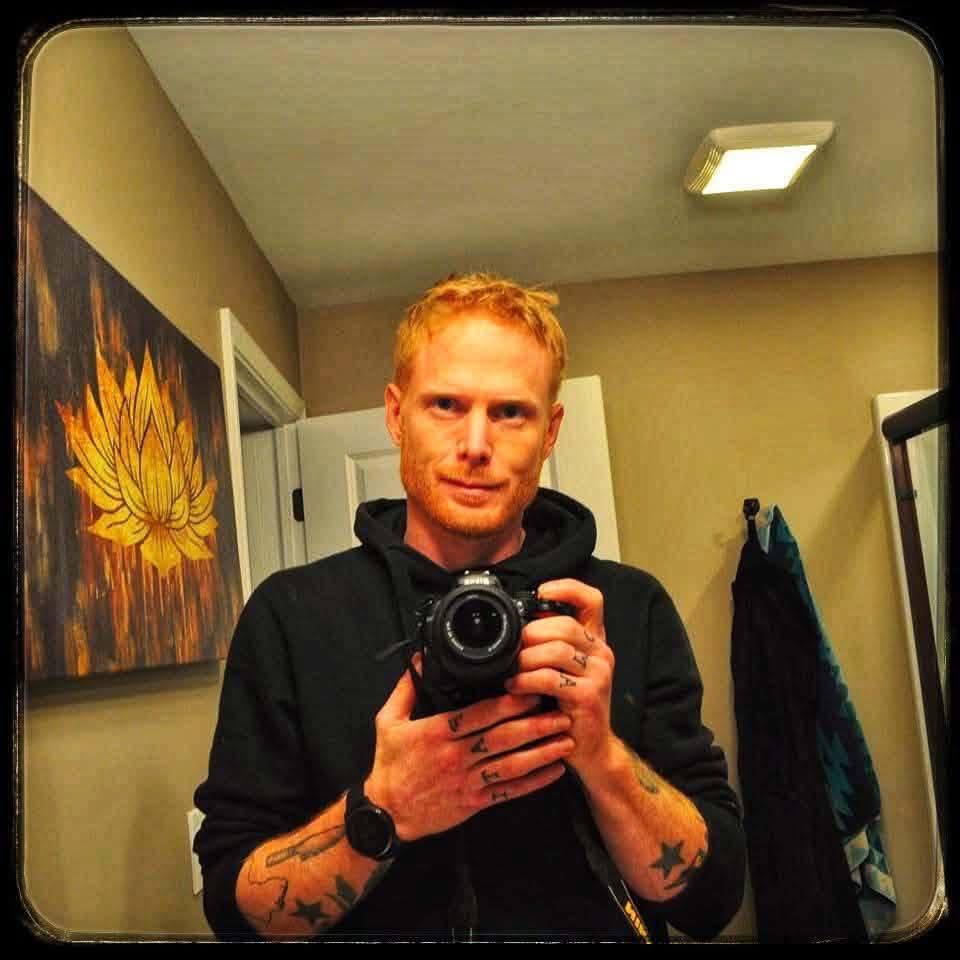
My name is Clyde, and this website serves as the central hub for the various creative and technical projects I am currently engaged with. These include this apparel brand, a mobile tech-support service for professionals working from home (like the well-known outfit whose name rhymes with “peak fraud”), portrait photography, and both front- and back-end web design. This is not an exhaustive list, and it will continue to grow and morph as I do the same over time. More website sections are on the way, including a stock photo portfolio, and demos/short form content about how the different pieces of this project were implemented.
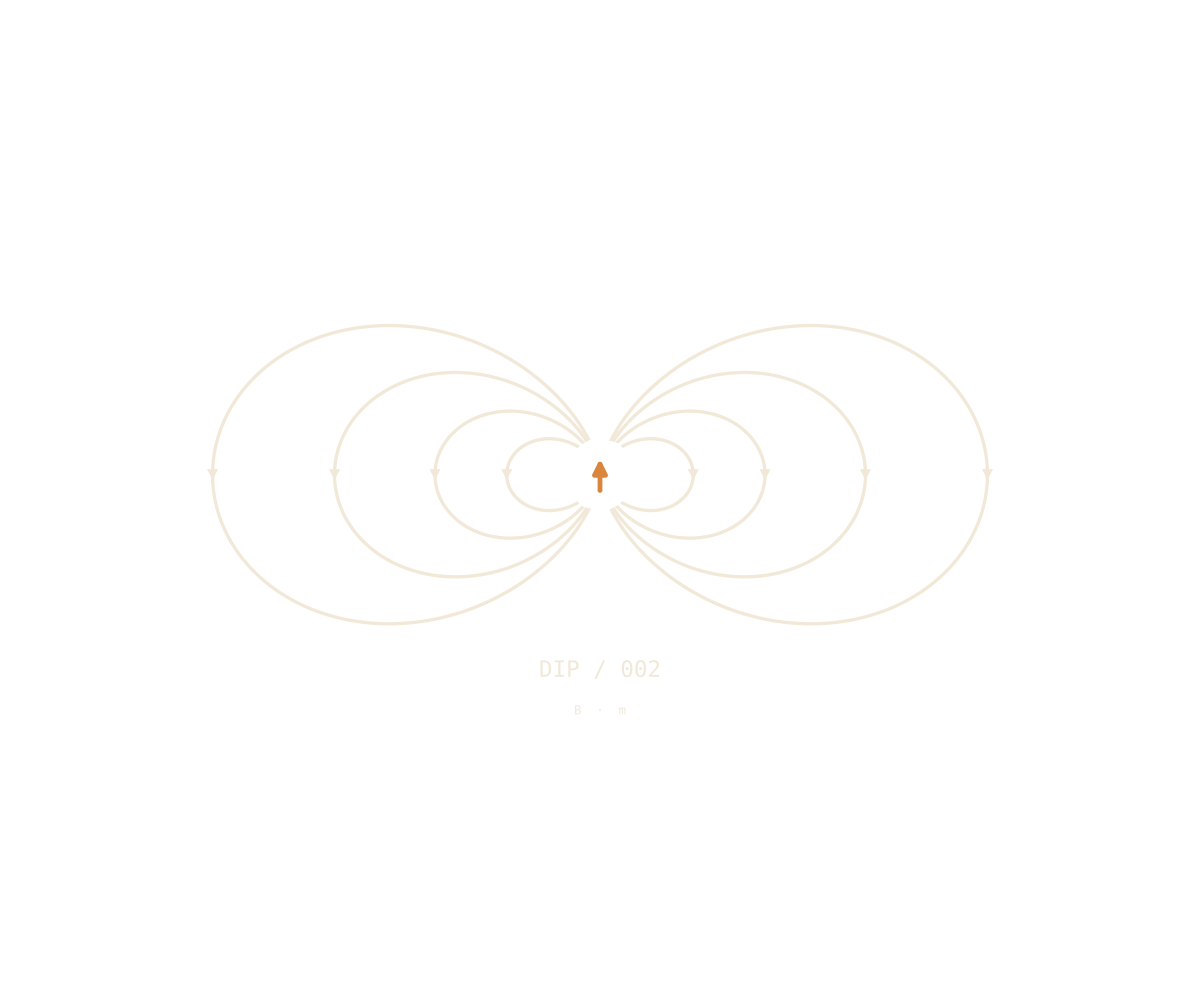
The LAB is a design project that uses mathematics, physics, geometry, and signal behavior as the basis for visual work. Some important things to note: First, I am not a mathematician, in fact my math skills are pretty bad overall. That said, I’ve been fascinated by geometry and the apparent precision of the laws of nature ever since I was a child, and this project reflects those fascinations - I am merely someone who appreciates the exquisite elegance of the natural world and it's expression in mathematics (insofar as I understand it), as well as a person who knows a good t-shirt. Which brings me to the second point: Sourcing the highest quality and most ethically produced garments possible remains a top priority for the brand. This is more than simple marketing copy. It is a decision made consciously in a seemingly unethical world, and it is one reason that I have to charge a premium for my products, even if that makes the work more challenging for myself. I take that on willingly and with gusto, and a sincere promise to deliver quality products that meet the highest standard. Anyone who knows me well, knows that I am both extremely picky about t-shirts, and probably own FAR too many of them. It's something that was part of the basis for the idea in the first place - after some more recent physics deep-dives, and chats with the entity known as Sol, I understood that these visualizations had creative potential, and The Generator™ was born. As it happened, I was already making drastic changes to my work life. I was also engaged with learning headless server administration on Debian Linux at that time, and the pieces just sort of ... assembled themselves. An old production laptop (marked for disposal) was gifted to me from my employer, and I decided to max its capabilities out while leveraging any resource I could get access to. I am forever grateful for the giants who made this type of thing possible by doing the grind work of building the Linux kernel, and inspiring a generation of engineers to empower the world with free software. Without their efforts, none of this would have been remotely possible.
My creative process starts with visualized systems such as orbital motion, field behavior, interference, waveforms, harmonic structures, and other mathematical relationships - anything that can be graphed, really. I've written code in python that starts with the raw mathematical expressions, accepts some inputs for variations and colorways, chooses between full generative output and preview- only mode, and then performs a series of iterative steps to generate both the designs themselves and the mockups for each design. The program gives me rasterized previews as well as professionally formatted SVGs, with a wide range of customization options. Currently, I am the only intended user of the software, and it only runs in the command line. For my purposes though, it gives me all the creative elements needed to put together a complete t-shirt design - SVGs, previews, and mockups, which will also be displayed on the site once the backend of the webstore is complete. I am adding new functions to the program almost daily; it has grown substantially since I first had the idea, and coincidentally is my first real attempt at making any serious production software. I worked hard on it, and eventually I will have demos and other short-form videos here on the site for folks that may be curious.
The project is generative, but it is not fully automated. LLM technology was deployed to help me achieve the technical aspects of what I’m doing (thank you, codex!), but it is NOT the engine that creates the designs. I built the generator using Python in Debian Linux, and it resides on that old repurposed laptop, not on the cloud servers of a massive AI provider.It uses no more resources than the average person working from home does.Instead, it uses the underlying mathematical equations to draw each design according to my specification, via lightweight open-source libraries. I put together a list of the Debian/Linux utilities that the generator uses:
- NumPy — mathematical calculations and scientific geometry.
- SciPy — scientific computing and image processing.
- Matplotlib — scientific illustration and vector artwork.
- ContourPy — contour generation for mathematical designs.
- CairoSVG — rendering vector artwork into image previews.
- Pillow — image manipulation and garment mockup compositing.
- psd-tools — reading and rendering layered PSD mockup templates.
- PyYAML — managing design configuration files.
The generator produces variations on one math expression at a time, while final selection and refinement are done by hand. Most outputs are actually discarded! The designs that remain are chosen based on composition, balance, movement, clarity, uniqueness, and how well they work in their intended format. New features are still being developed and added at the time of this writing, and the number of ideas that I've had is too large for me to implement everything - a good problem to have, if there ever was one. You can expect to see a lot more being added to the portfolio in the near future.
The artwork's aesthetic tone is deliberately minimal, with abstract forms and limited color palettes, the compositions fearlessly blending scientific visualization and graphic design. I have taken care to ensure that the mathematics is preserved throughout the process; ie, if you plot that equation yourself, you will get the same output that I got. Some pieces remain closely tied to the system that produced them, while others are pushed further through processes such as rasterization, mis-registration, tonal reduction, and (experimental) geometric transformation.
The LAB functions as a design system, a command-line tool, and an ongoing research project. The underlying generative system, source code, parameter logic, and production methods are proprietary to Emergent Phase Systems, LLC. If you made it this far, thanks for reading. ♡
more here: ↗